




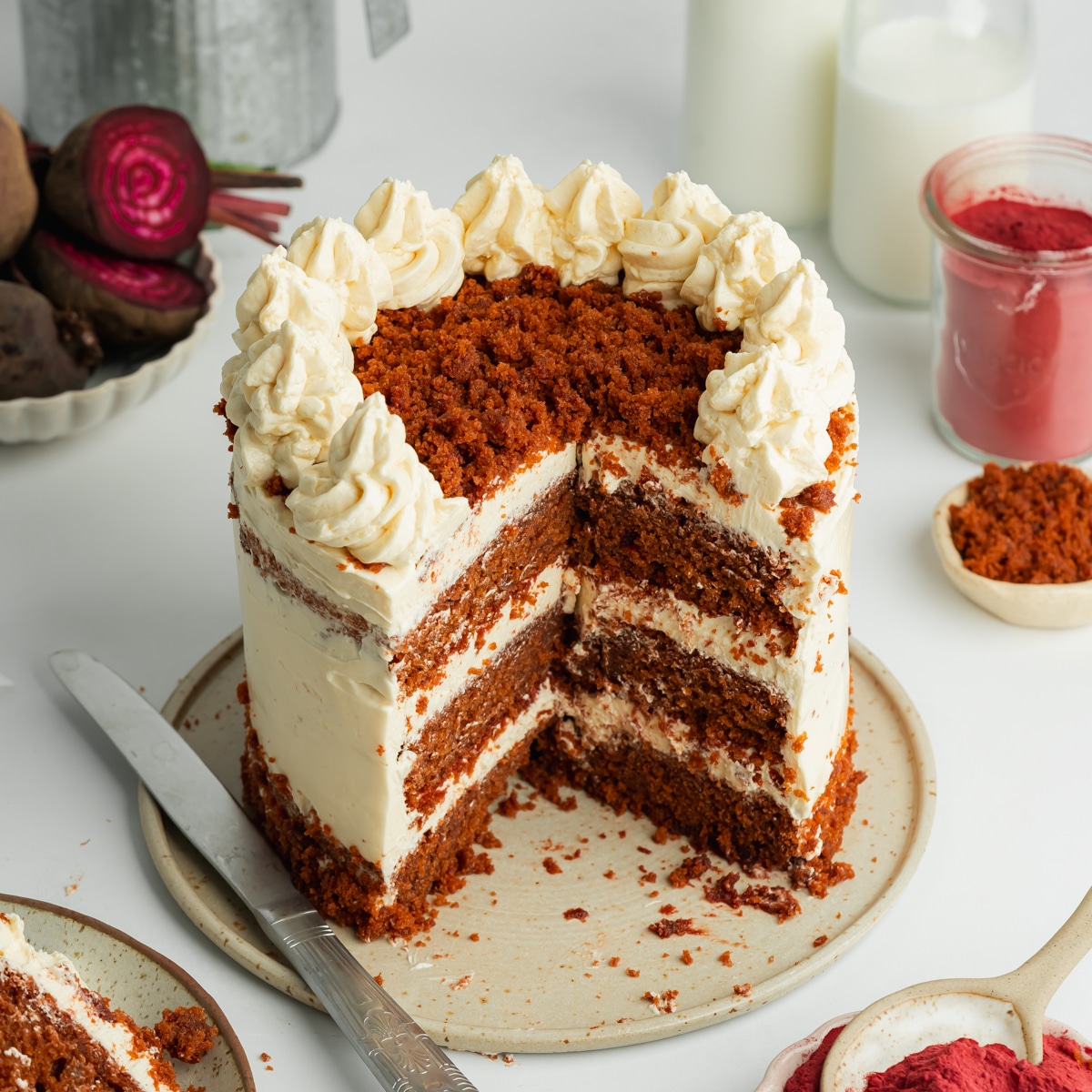
This recipe is kindly sponsored by LiveWell Earth. All opinions are my own. Thank you for supporting the brands who sponsor my work!
Red velvet cake wasn't always the vivid scarlet color we associate with it today. Earlier versions were generally much more muted, with natural cocoa and acidic ingredients such as buttermilk and vinegar contributing to a reddish-brown tone. As Dutch-processed cocoa became more common and commercial food coloring grew in popularity, the brighter red cake we know today became more familiar.
For this version, I use LiveWell Earth Beetroot Powder to create the color without artificial food coloring. Because it's a dry beetroot powder, it adds color without introducing the extra liquid you'd get from fresh beetroot or beet purée.
I finish the cake with my vegan Swiss meringue buttercream, which is silky, light, and not overly sweet.
Why this recipe works
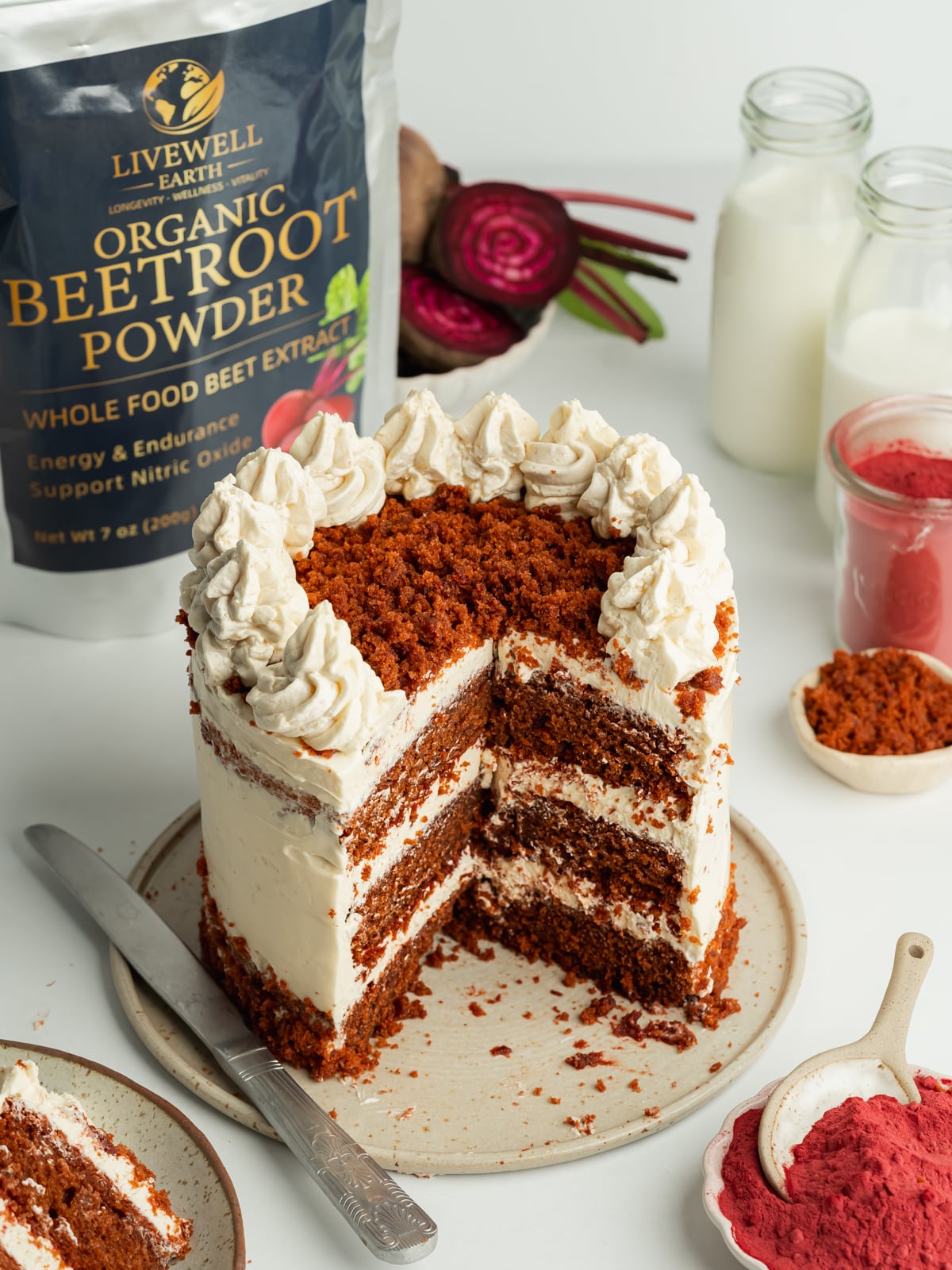
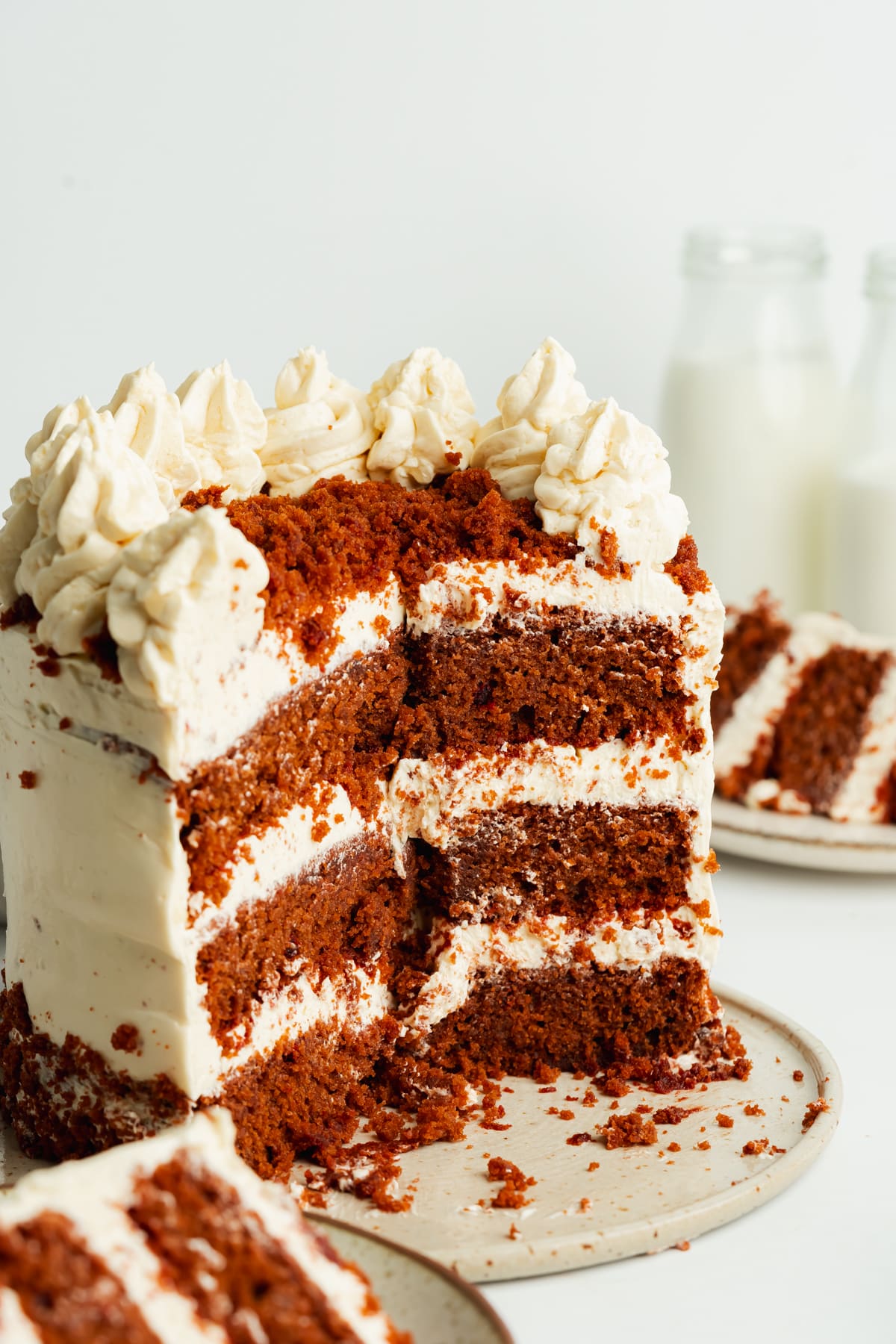
Whipped aquafaba gives the cake its velvety texture. I tested a simpler version without whipped aquafaba, but the cake was noticeably denser. Whipping the aquafaba before folding it into the batter made a big difference to the final texture, giving the sponge a much lighter, more delicate, almost melt-in-your-mouth crumb. It works in a similar way to whipped egg whites, which are used in many traditional red velvet cakes to add lift and tenderness.
Naturally colored. Beetroot powder gives the cake its red hue without relying on artificial food coloring.
Vegan buttermilk keeps it tender. It adds moisture along with the gentle acidity and slight tang that work so well in red velvet cake.
A little cocoa keeps it true to red velvet. This is not meant to taste like a full chocolate cake. The cocoa adds depth while still allowing the vanilla and tangy buttermilk flavors to come through.
Swiss meringue buttercream keeps it balanced. The silky frosting is lighter and less sweet than a traditional powdered sugar buttercream, which works especially well with the delicate cake layers.
Ingredients
Here's everything you need to make this recipe. Find the complete list of ingredients, quantities, and instructions in the recipe card at the end of this post.
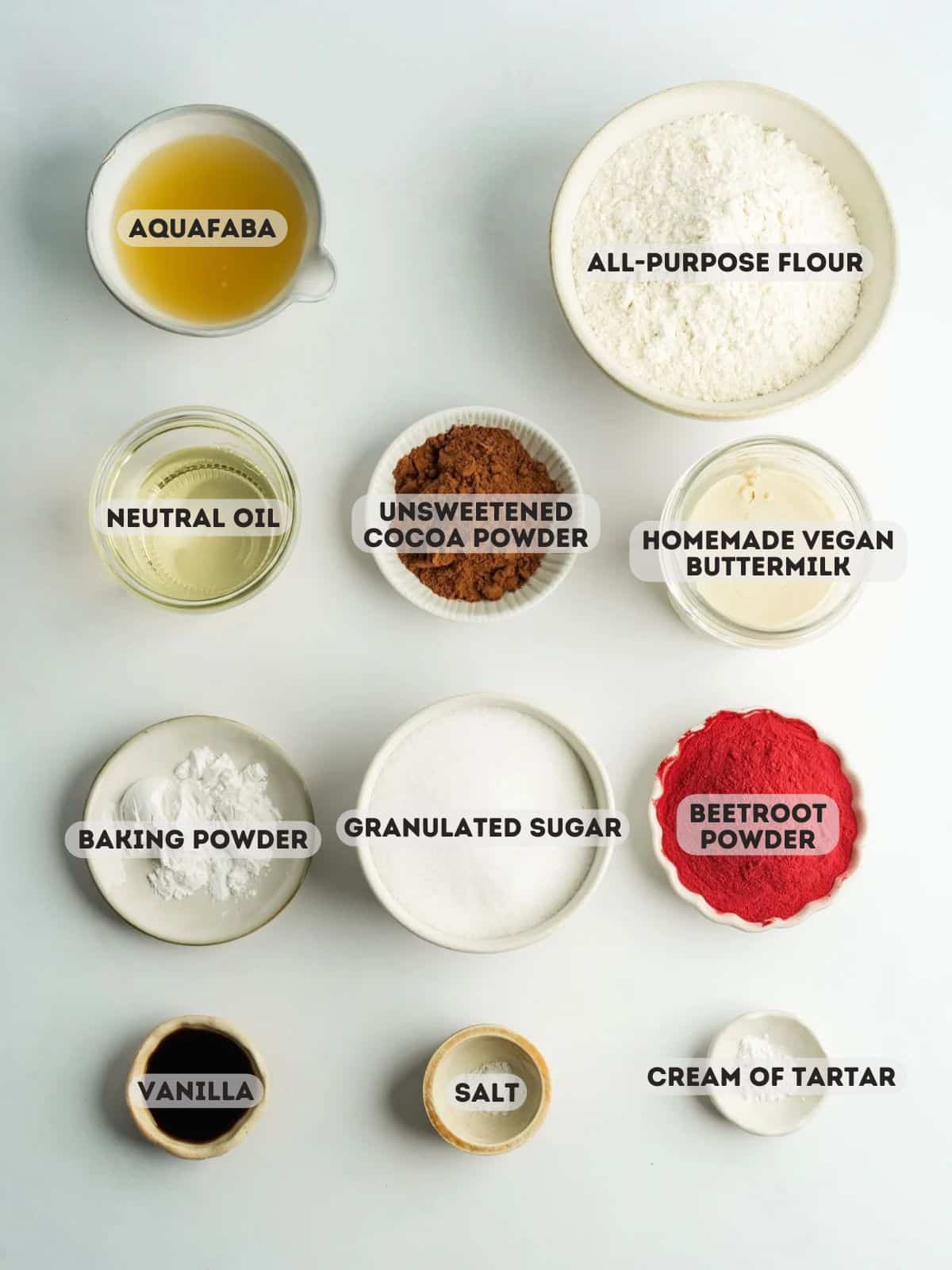
Beetroot powder: I use LiveWell Earth Beetroot Powder to naturally color the sponge. Because it's a dry powder, it works much more predictably here than fresh beetroot or beet purée, adding concentrated color without changing the liquid balance of the batter. Despite the amount used, the finished cake doesn't taste like beetroot - the cocoa, vanilla, and tangy buttermilk come through instead.
Aquafaba: The liquid from canned chickpeas is whipped until stiff and folded through the batter to create a lighter crumb.
Cream of tartar: Helps stabilize the whipped aquafaba so it holds its structure while you finish the batter. If you don't have cream of tartar, you can use ¼ teaspoon lemon juice instead.
Natural unsweetened cocoa powder: Use natural cocoa powder for the best color and classic red velvet flavor. Dutch-processed cocoa is alkalized and darker, which can push the sponge toward brown and mute the red color. Raw cacao is also stronger and more bitter, so I don't recommend either for this recipe.
Vegan buttermilk: Adds acidity, moisture, and tenderness to the crumb.
Neutral oil: Use something neutral like sunflower oil or a light olive oil. It keeps the cake soft without competing with the vanilla, cocoa, or beetroot.
Vegan Swiss meringue buttercream: I use my vegan Swiss meringue buttercream for the filling and frosting because it's silky, stable, and lighter than a traditional powdered sugar buttercream.
How to make vegan red velvet cake
Here's a visual overview of this recipe. Please refer to the detailed card at the end of this page for full written instructions.
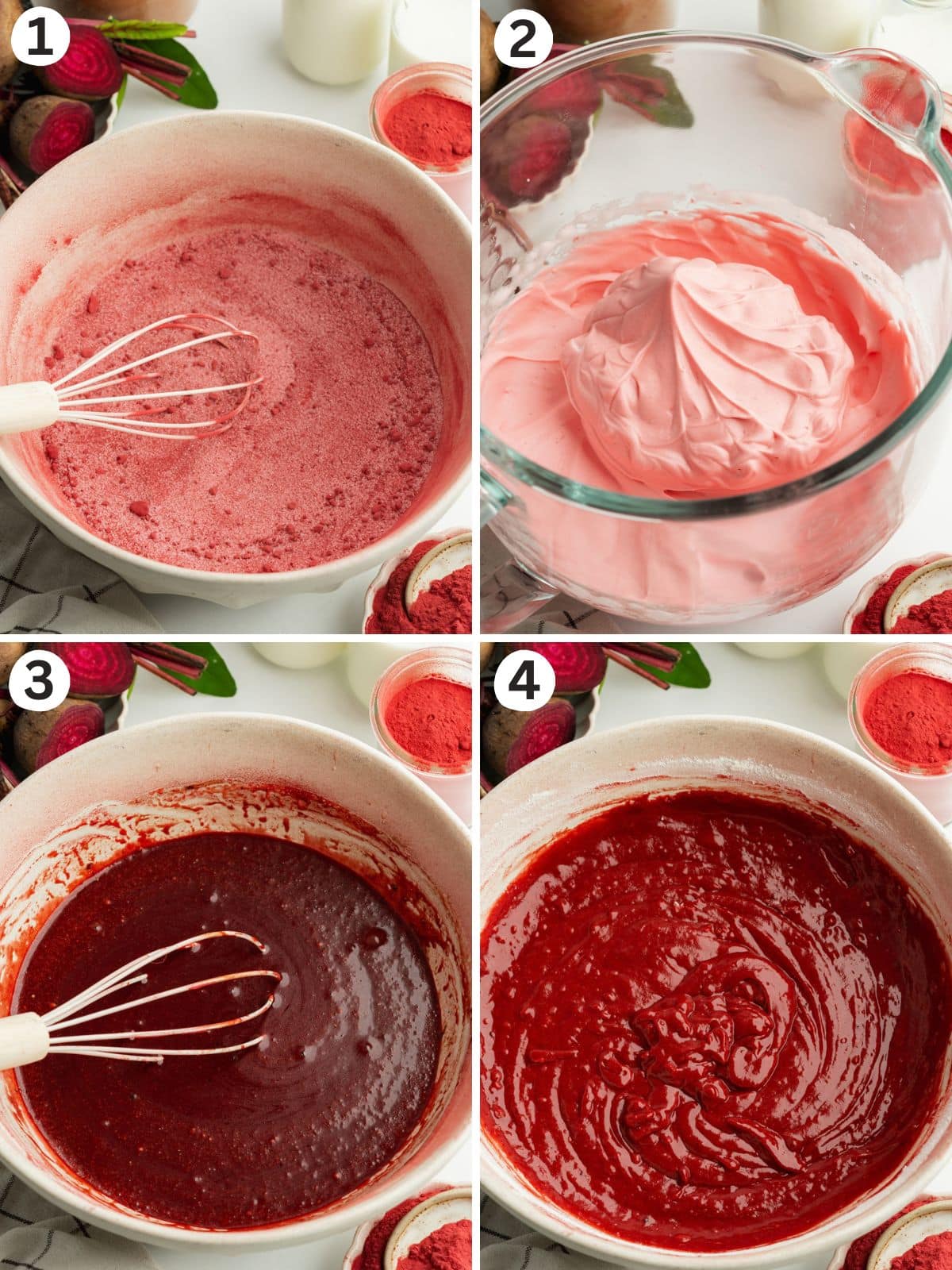
Start by whisking the beetroot powder into the sugar. I found this was the easiest way to distribute the powder evenly through the batter and avoid any little pockets of concentrated color. Once combined, set aside a small portion of the mixture to whisk into the aquafaba.
The aquafaba should be at firm, glossy peaks before you add the sugar mixture. Don't rush this stage - it takes around 10 minutes in my mixer, and getting enough air into it is important for that lighter, velvety texture. Adding a little of the sugar helps make the foam more stable before it is folded into the heavier cake batter.
When you add the dry ingredients to the wet mixture, keep the mixing fairly gentle and stop as soon as you no longer see streaks of flour. The batter will look quite deep red at this stage, but it becomes noticeably lighter once the whipped aquafaba is folded through.
Add the aquafaba in a few batches rather than all at once. I like to use a spatula to cut through the center of the batter, scoop underneath, and fold it over itself. You're not trying to keep every single air bubble intact, but vigorous stirring will knock out too much of the air you worked to create.
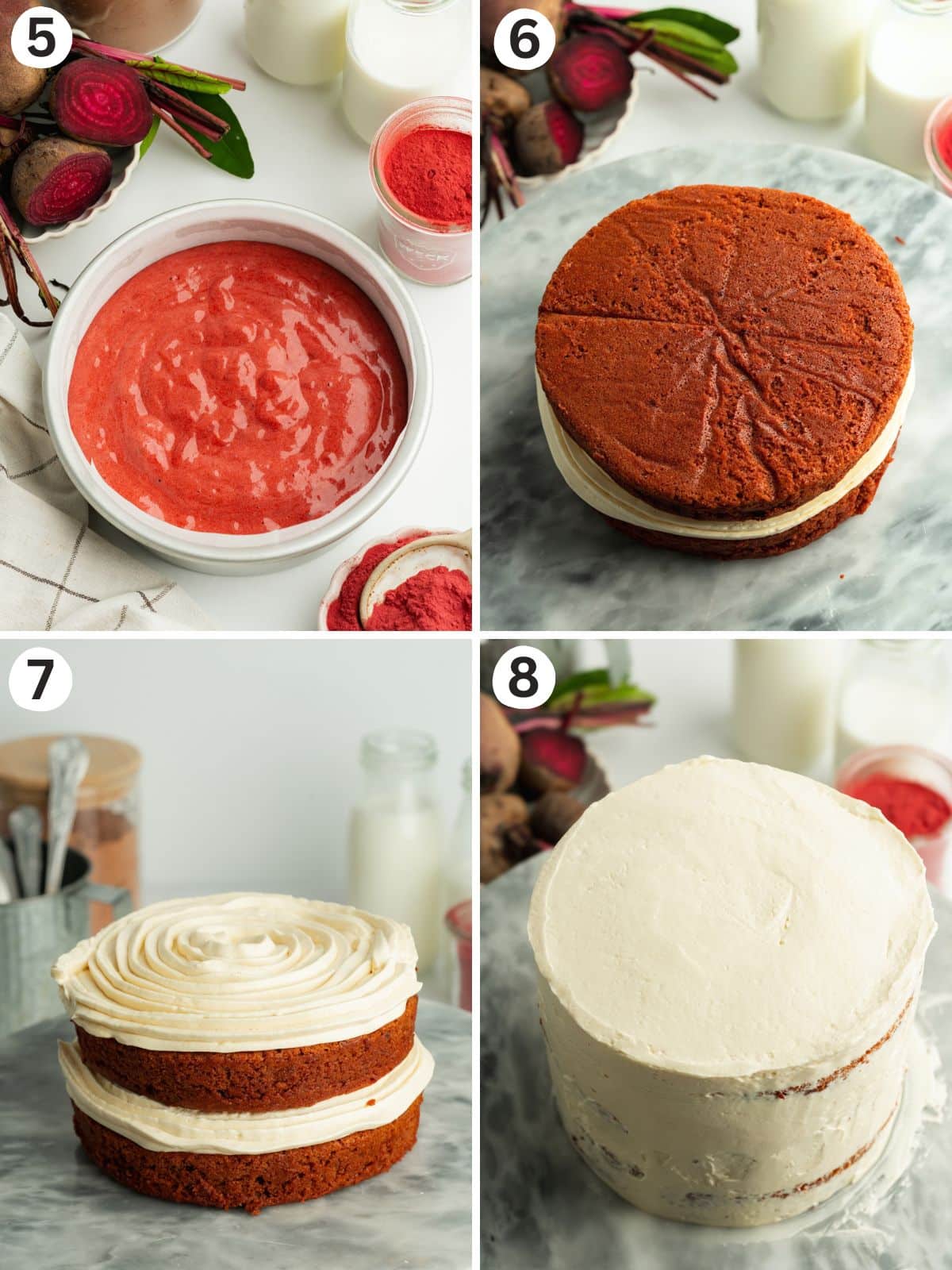
Once baked, look for set tops and a skewer that comes out with a few soft crumbs rather than wet batter. The layers are quite tender while warm, so give them time to cool before turning them out.
You can frost them once completely cool, although I find chilling the layers for a few hours or overnight makes stacking and frosting much easier.
Christina's recipe tips
Whip the aquafaba fully. Don't stop until it reaches stiff peaks - this is what helps create the light, velvety texture of the finished cake.
Fold gently. Once the aquafaba goes into the batter, avoid vigorous mixing so you don't knock out the air you've just incorporated.
Divide the batter by weight. Weighing the filled pans is the easiest way to get three even cake layers that bake at the same rate.
Line the sides as well as the bases. This helps the delicate layers release cleanly without catching around the edges.
Handle the layers gently while warm. They're quite tender straight from the oven, so let them cool properly before turning them out or moving them.
Make it ahead. The cake layers can be baked the day before, cooled completely, and stored in an airtight container in the refrigerator. Chilled layers are actually easier to stack and frost neatly.
Frequently asked questions
No. The beetroot powder is primarily there for color, while the finished cake tastes of subtle cocoa, vanilla, and tangy vegan buttermilk.
I don't recommend it for this recipe. Dutch-process cocoa is alkalized and darker, which can mute the red color and push the sponge more toward brown. Natural unsweetened cocoa gives the most predictable color and classic red velvet flavor here.
The type of cocoa matters here. Make sure you're using natural unsweetened cocoa rather than Dutch-process cocoa or raw cacao, as darker cocoa can overpower the beetroot color. Also measure the beetroot powder accurately so you get the intended concentration of color.
More Vegan Celebration Cakes

📖 Recipe
Vegan Red Velvet Cake Without Food Coloring
Ingredients
- 100 g (⅓ cup + 4 teaspoons) aquafaba *note 1
- ¼ teaspoon cream of tartar
- 225 g (1 cup + 2 tablespoons) granulated sugar
- 30 g (⅓ cup) beetroot powder I use Livewell Earth Organic Beetroot Powder
- 15 g (1 tablespoon) unsweetened cocoa powder
- 120 ml (½ cup) neutral oil *note 2
- 1 tablespoon vanilla extract
- 1 batch (240 ml) homemade vegan buttermilk
- 250 g (2 cups 1 tablespoon + 1 teaspoon) all-purpose flour sifted
- 2 teaspoons baking powder sifted
- ¼ teaspoon sea salt
- 1 batch vegan Swiss meringue buttercream for a lightly frosted cake, or 1½ batches for a generously frosted cake
Instructions
- Prepare: Preheat the oven to 320°F (160°C) fan or 356°F (180°C) conventional. Lightly grease the base and sides of three 6-inch cake pans with oil. Line the base of each pan with a circle of parchment paper and the sides with strips of parchment.
- Whip the aquafaba: Add the aquafaba and cream of tartar to the bowl of a stand mixer, or a large mixing bowl if using an electric hand mixer. Whisk on high speed for about 10 minutes, until stiff peaks form. Set aside.
- Mix the sugar and beetroot powder: In a large mixing bowl, whisk together the sugar and beetroot powder. Remove 50 g (about ¼ cup) of the beetroot-sugar mixture and add it to the whipped aquafaba. Whisk for another 1 minute, until combined.
- Make the batter: Add the cocoa powder to the remaining sugar and beetroot mixture and whisk to combine. Add the neutral oil, vanilla, and vegan buttermilk and whisk until smooth.In a separate bowl, sift together the flour, baking powder, and salt. Add the dry ingredients to the wet mixture in 2 additions, whisking gently after each addition until just combined.
- Fold in the aquafaba: Gently fold the whipped aquafaba into the batter in batches until evenly incorporated. Take care not to overmix or knock out the air.
- Bake: Divide the batter evenly between the prepared cake pans. Bake for 35-45 minutes, until a toothpick or skewer inserted into the center comes out with a few soft crumbs but no wet batter.
- Cool the cakes: Let the cakes cool in the pans for 15-20 minutes, then carefully turn them out onto a wire rack. Peel away the parchment and let them cool completely for at least 1 hour, or until cool to the touch.If preferred, store the cooled cake layers in an airtight container in the refrigerator until ready to assemble. Chilling them for a few hours or overnight makes them easier to handle and decorate.
- Prepare the frosting: Make a batch of vegan Swiss meringue buttercream. Transfer the frosting to a piping bag fitted with a round piping tip, or simply snip the end from a piping bag or zip-top bag.
- Assemble: Add a small amount of frosting to the center of a cake turntable or serving plate and place the first cake layer on top to secure it.Pipe a layer of frosting over the cake and smooth it into an even layer with an offset spatula. Add the second cake layer and repeat, then top with the final cake layer.Use the remaining buttercream to coat the top and sides of the cake, then smooth with an offset spatula and cake scraper.
- Storage: Store the cake in an airtight container in the refrigerator for up to 5 days. Remove it from the refrigerator about 1 hour before serving so the cake and frosting can soften slightly.
Notes
- Aquafaba: The liquid part from canned/tinned chickpeas (chickpea brine).
- Neutral Oil: Sunflower oil or light olive work well.
© addictedtodates.com. All content and images are protected by copyright. If you want to share this recipe, please do so using the share buttons provided. Do not screenshot or republish the recipe or content in full. Instead, include a link to this post for the recipe. Thank you!